How much does it cost to charge an electric car in Costa Rica, and what happens when gas prices rise?
Gas prices are going up again in Costa Rica
A new fuel price adjustment has been in effect in Costa Rica since Saturday, March 14, as published in Alcance No. 27 of the official gazette La Gaceta. On top of that, many people are wondering how much it costs to charge an electric car compared with other types of energy.
The new prices reflect an increase across all the main fuels:
- Super gasoline: from ¢628 to ¢633 (+¢5)
- Regular gasoline: from ¢593 to ¢607 (+¢14)
- Diesel: from ¢513 to ¢530 (+¢17)
- LP gas: holds at ¢242
The increase may look moderate, but the broader context suggests this is not a one-off adjustment. Preliminary data from Refinadora Costarricense de Petróleo indicate that another hike could arrive in the short term.
The global factor: oil, conflict and volatility
The rise in fuel prices is not driven by local dynamics alone. It is directly shaped by the international context, particularly the armed conflict in the Persian Gulf and the risk of disruptions in the Strait of Hormuz, one of the most strategic points for global oil transport.
When there is uncertainty about supply, crude prices tend to climb quickly, which translates into almost immediate increases at the pump.
This pattern has one key trait: it is highly volatile and unpredictable.
And that is exactly where the conversation about mobility starts to change.
How much does it cost to charge an electric car in Costa Rica?
Unlike gasoline, the cost of charging an electric car in Costa Rica is tied to the electricity rate, which is far more stable and predictable.
In general terms:
- Fully charging an electric vehicle can cost between ¢3,000 and ¢6,000, depending on the model and the battery capacity.
- That can translate into a significantly lower cost per kilometer compared with gasoline.
For example:
- A gasoline vehicle can spend between ¢60 and ¢90 per kilometer
- An electric vehicle can land in a range of ¢10 to ¢20 per kilometer
The difference is not just technical, it is economic.
Gasoline vs. electricity: two completely different logics
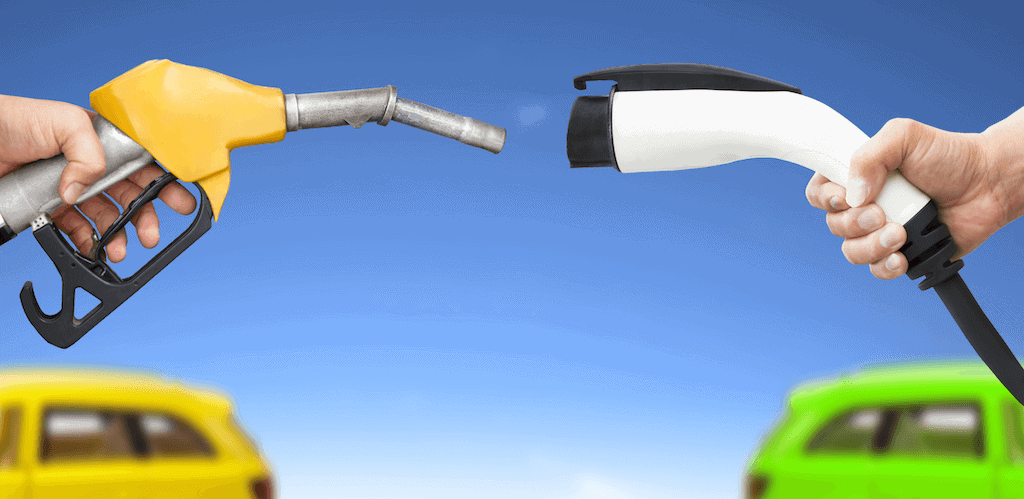
The key difference is not only today's price, but how each system behaves:
Gasoline:
- Depends on the international market
- Affected by geopolitical conflicts
- High volatility
- Frequent adjustments
Electricity:
- Regulated at the national level
- Shaped by the energy mix (in CR, mostly renewable)
- Much more stable
- Less variation over time
That makes the electric vehicle not only a cleaner option, but an alternative with greater economic predictability.
What happens when gas prices rise?
Historically, fuel price increases produce two effects:
- Interest in electric and hybrid vehicles goes up
- People start questioning the real cost of getting around
This has already played out in other markets: when gasoline rises steadily, consumers look for more efficient alternatives.
The decision is not immediate, though. Factors such as the vehicle's upfront price, charging infrastructure and the perception of savings still weigh in.
Beyond price: a strategic decision
The current context makes one thing clear: mobility does not come down to preferences alone, but also to external variables the user does not control.
Oil prices, international conflicts and global supply chains will keep creating uncertainty around the cost of fuel.
By contrast, more stable energy models, such as electricity, make it possible to reduce that exposure.
When the context changes, the decision changes too
The rise in gas prices is not an isolated event, but part of a global dynamic that will keep shaping mobility in the years ahead.
In that scenario, understanding what it really costs to get around, and which factors drive that cost, becomes more and more relevant.
More than a trend, electric mobility is starting to establish itself as an alternative that answers not only to environmental criteria, but also to a growing need for stability and predictability