Green plate benefits: what it really means and why it matters

What does the green plate mean in Costa Rica?
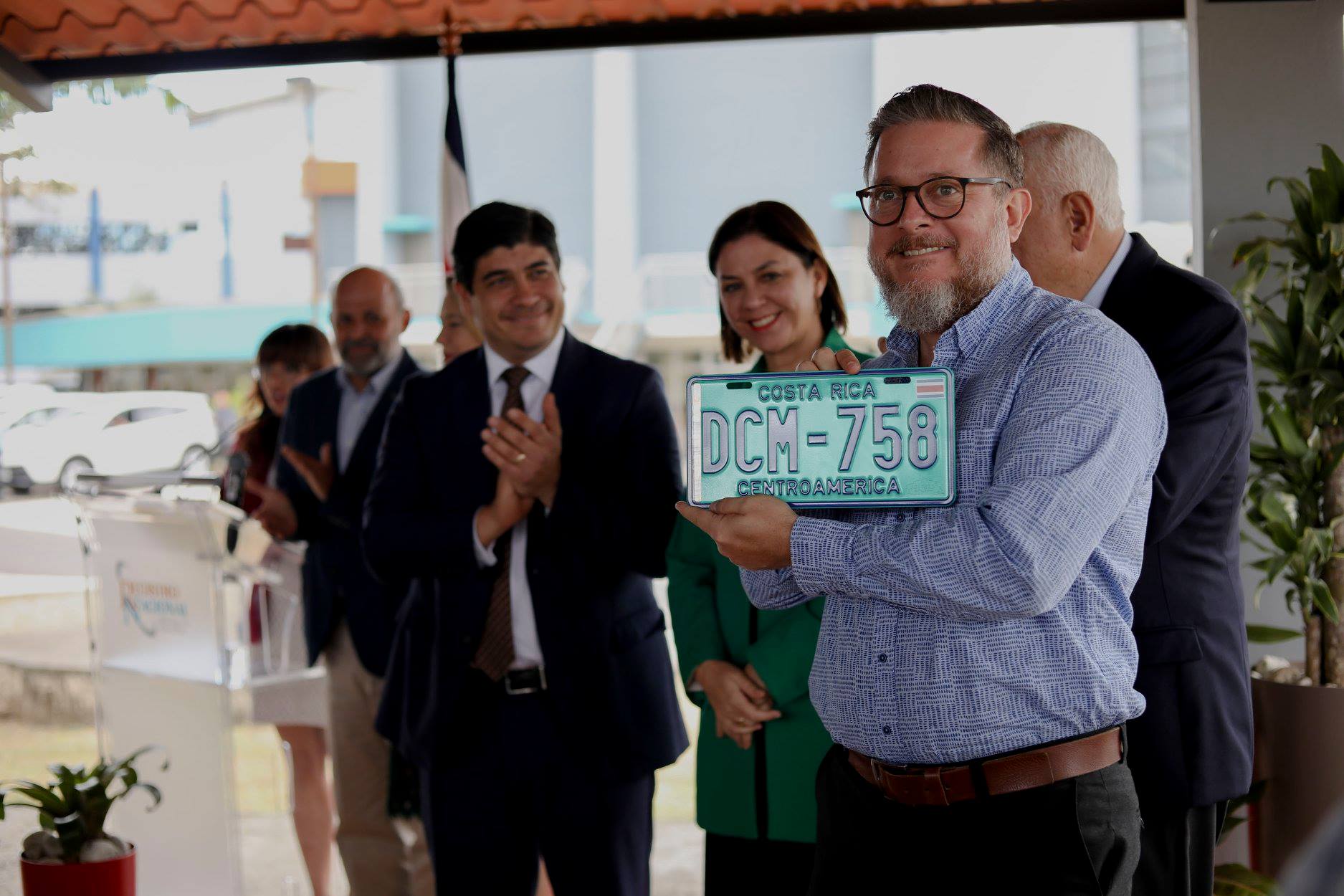
If you have been seeing more and more cars with green plates on the road, it is no coincidence. The green plate in Costa Rica identifies electric vehicles, and it is a topic that matters more every day.
This marker identifies electric vehicles, meaning those that run without fossil fuels and use electricity as their only source of propulsion.
Its meaning, however, goes far beyond the visual. The green plate represents a transformation in the way mobility is understood in Costa Rica: a transition toward a system that is more efficient, cleaner, and less dependent on oil.
When was the green plate introduced?
Green plates were introduced in Costa Rica during the administration of Carlos Alvarado in February 2019, as part of the implementation of Law No. 9518 and a national strategy to promote electric transportation.
Since then, this marker has not only made it possible to identify electric vehicles, but also to apply a series of benefits tied to their use.
A benefit backed by law
The benefits tied to vehicles with green plates are backed by Law No. 9518, which establishes incentives and public policies to promote electric transportation in Costa Rica.
This law defines electric vehicles as those powered by one hundred percent electric energy with zero emissions.
It also declares the promotion of this technology to be in the public interest, establishing an institutional framework for its development.
Main benefits of the green plate
1. They are exempt from the restricción vehicular
Electric vehicles are not subject to the restricción vehicular, the driving restriction in the metropolitan area, which means they can be driven freely every day.
2. Savings in daily use
The cost per kilometer of an electric vehicle is considerably lower than that of a combustion vehicle.
This comes down to:
- the lower cost of electricity
- greater energy efficiency
- less dependence on international fuels
In practice, this translates into steady savings over time.
3. Less maintenance
Electric vehicles require less maintenance because:
- they use no motor oil
- they need no tune-ups
- they have fewer mechanical components
On top of that, the regenerative braking system reduces brake wear.
4. Lower environmental impact
Electric vehicles emit no polluting gases while in use.
In Costa Rica, this benefit is even greater, since most of the electricity comes from renewable sources such as water, wind, and sun.
5. Additional benefits of use
The regulations also provide for perks such as:
- preferential parking
- possible exoneraciones, or exemptions, from parking meter fees depending on the municipality
These conditions are meant to make everyday use of an electric vehicle easier.
6. Tax incentives
The law establishes exoneraciones, or exemptions, from various taxes for electric vehicles, which lowers their purchase cost and makes this technology easier to access.
That has opened the door to more options on the market today, with a wider range of models, trims, and price points.
In this context, companies such as Go-Electric Motors have helped broaden access to electric vehicles in Costa Rica, bringing within reach alternatives that used to be harder to come by and making it easier to adopt this technology.
Read the full text of Law No. 9518 here
One important point: not everything “electric” is zero emissions
One thing worth keeping in mind in the national context is that not every vehicle classified as electric meets the zero emissions condition.
There are hybrid technologies and specific configurations that can be registered as electric from a technical standpoint, but that do not necessarily meet the environmental criteria to receive every benefit.
This has sparked debate over how green plates are assigned and the need to improve the classification process.
Beyond the benefits: a strategic decision
The green plate also represents a structural shift in mobility:
- less dependence on imported oil
- greater stability in transportation costs
- use of locally produced energy
In a context where fuels are more volatile than ever, this kind of technology takes on growing importance.
The green plate is much more than a visual marker. It reflects a public policy aimed at transforming mobility in Costa Rica, combining economic, operational, and environmental benefits.
Understanding what it means makes it possible to grasp not only its advantages, but also the role it plays in the transition toward a more sustainable and efficient transportation model.